Leading From Wholeness: Reframing Leadership Through Wholistic Wellbeing

The pace of change today is relentless, and so is its impact.
Technological disruption. Global pandemics. Climate instability. Deepening inequality.
These aren’t isolated shocks. They’re overlapping realities reshaping how we live, work, and lead.
What they demand is not just smarter systems, but integrated leadership, leadership that is resilient, adaptable, and above all, whole.
Over the years, I’ve come to see that the future of leadership must integrate three dimensions:
- Self-Care: the quality of energy we bring into every interaction
- Team Wellbeing: the culture we cultivate together
- Social Impact: the legacy we leave beyond our walls
Together, these form the foundation of sustainable, human-centered leadership.
A philosophy I call Wholistic Wellbeing.
Burnout Is a Business Risk
For too long, leadership has been defined by endurance, by the ability to push through at any cost.
But when we burn the candle at both ends, we fragment. We grow reactive, miss nuance, and risk reinforcing the very systems we hope to transform.
I’ve experienced this firsthand.
After growing Edifecs from a struggling startup into a thriving healthcare company, I reached a point where outward success came at the expense of my wellbeing. I learned, sometimes the hard way, that hard work alone doesn’t guarantee fulfillment.
What changed everything for me was combining smart work with wholistic self-care. That’s when my growth became exponential, not just incremental, both personally and professionally.
Wholistic Wellbeing: The Inner Journey Shapes the Outer Impact
To lead effectively, I must live effectively.
Wholistic Wellbeing, spelled intentionally with a “W,”reminds me that wellbeing isn’t a category. It’s the context for everything. It includes:
- Physical
- Mental
- Spiritual
- Social
- Financial
- Professional
- Community
- Planetary wellbeing
When these domains are aligned, not siloed, they become compounding energizers, fueling sustainable momentum and clarity of purpose.
Wholistic Wellbeing is not a destination, it’s a daily practice.
Team Wellbeing: Culture as a Supercharger
Now imagine this at the team level.
A culture where people feel safe, energized, and supported. Where individuals are empowered to care for themselves and one another. Where adaptability is shared, not carried alone.
In The Adaptation Advantage, Heather McGowan and Chris Shipley note that the most resilient teams are those that can learn, unlearn, and adapt together.
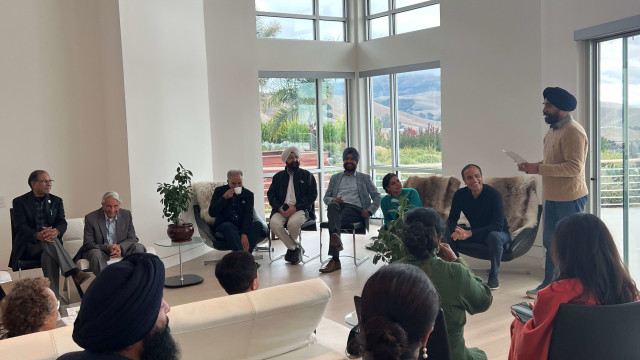
I’ve witnessed these principles in motion during our CEO Dinners, where conversations about values, trust, and shared responsibility led to unexpected alignment and new possibilities.
Wholistic Wellbeing, at the team level, becomes a cultural multiplier and a strategic advantage.
Every Leader Leaves a Wake
Leadership doesn’t happen in isolation.
Every policy, every product, every priority sends ripples into the world.
And in today’s interconnected world, that wake can either heal or harm.
The why behind our work matters as much as the what. Misaligned action, even well-intended, can cause harm or deepen distrust.
That’s why social impact is not a department. It’s a core leadership responsibility, rooted in:
- Trauma-Informed Leadership: Seeing invisible scars and leading with dignity and care.
- Ethical Decision-Making: Asking not just “Is this efficient?” but “Is this right?”
- Civic Engagement: Listening deeply, collaborating authentically.
- Systems Awareness: Recognizing interdependence and acting with regenerative intention.
I’ve seen this come to life at Roundglass Foundation, especially through initiatives like Her Punjab which breaks transgenerational cycles of bias, fuels women's leadership, and drives sustainable, community-led change. When wellbeing is woven into culture, not bolted on, it transforms engagement and deepens collaboration.
What Happens When We Lead from Wholeness?
When leaders show up energized and present, they lead with clarity.
When teams feel safe and supported, they adapt with courage.
When organizations act with integrity and purpose, people respond with trust.
This isn’t aspirational, it’s backed by data.
Research shows that purpose-driven companies outperform competitors by upwards of 10x. They attract aligned talent, earn loyalty, and build cultures that endure.
The future isn’t just about what we build. It’s about how we lead the people building it.
Wellbeing Is Leadership
I’m not offering Wholistic Wellbeing as the answer.
There is no single answer.
But I am offering a shift:
- From leading through fragmentation to leading through wholeness
- From striving alone to thriving together
- From control and conquest to care and coherence
The leadership we need now isn’t just more efficient.
It’s more conscious.
More responsive.
More human.
That’s the kind of leadership I aspire to live, and support in others.
Lead From Wholeness.
This article is part of Sunny Singh's LinkedIn series on Wholistic Wellbeing.
About the Teacher