Elephant Apple
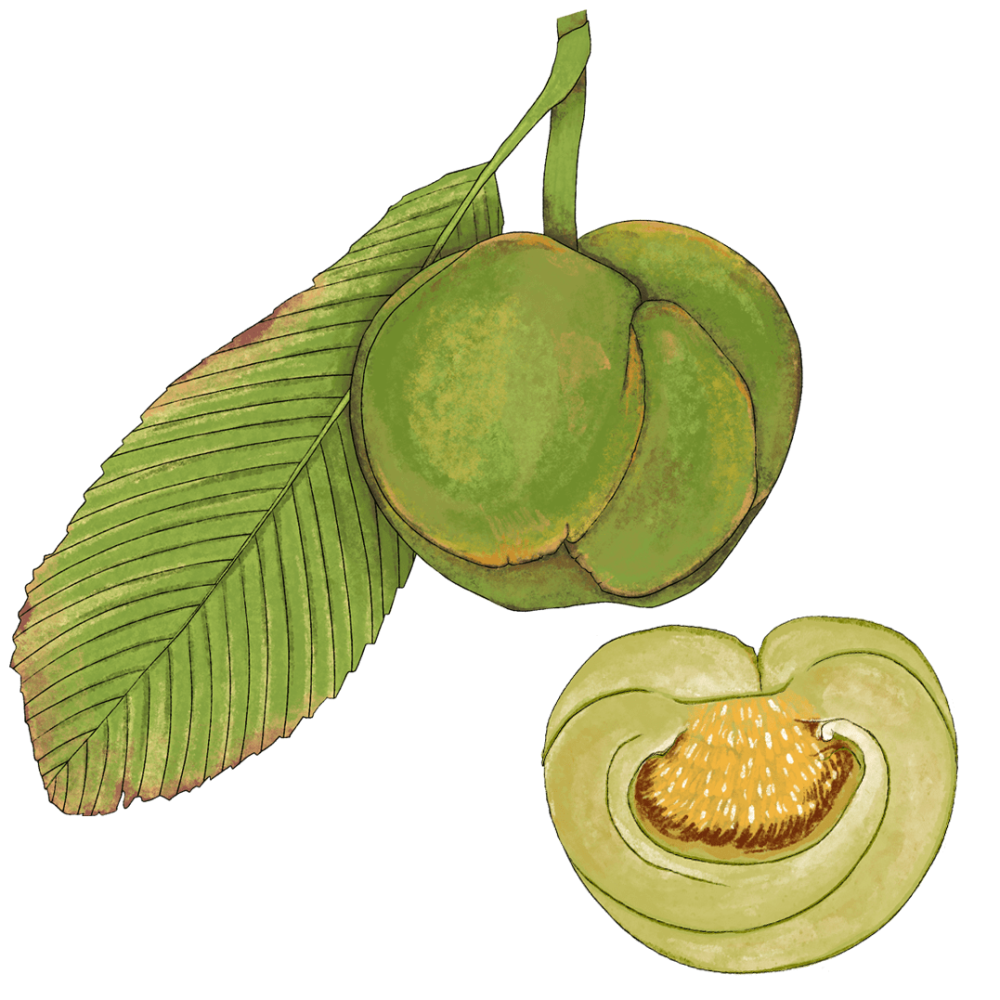
Latin Name: Dillenia indica
Other names: ou tenga, chalta, simpuh, Indian simpoh
Central to the cuisine of Assam, India’s lush northeastern state, the elephant apple is a green fruit with knobbly, leathery skin that resembles an elephant’s toe — and is also much loved by local pachyderms. Its fibrous, mouth-puckering tartness is the stuff of many childhood memories. Large, aromatic, magnolia-like flowers announce the arrival of the fruit, which emits a sour odor.
Why is elephant apple healthy?
Elephant apple is an energizing fruit and a good source of fiber, calcium, phosphorus, and vitamins A, Bs, and C. These nutrients are essential for maintaining cardiovascular, brain, and eye health and promoting overall immunity. The fleshy sepals are rich in flavonoids, tannins, ascorbic acid, malic acid, and a polysaccharide called arabinogalactan, which enhances the body’s ability to fight inflammation and infections. Tribes in Northeast India use the fruit as a herb, mainly to treat indigestion, stomach pains, and as a tonic.
What does elephant apple taste like?
Elephant apple is distinctly sour and densely fibrous. The fruit is aromatic and astringent as it begin to ripen; at peak ripeness, it delivers a sharp kick to any dish. The gelatinous fruit pulp also imparts a creaminess to curries, besides adding its quintessentially nippy, citrusy aroma to the dish.
Where does elephant apple grow?
Elephant apple is native to Asia, including China, Vietnam, Indonesia, Malaysia, Thailand, Sri Lanka, and India. The tree thrives in tropical climates from Bangladesh to Brazil. In India, it’s predominantly found in Assam and the sub-Himalayan forests of neighboring states.
How do I prepare elephant apple and what do I pair it with?
Getting to the good stuff can appear daunting for first-timers, but we promise it’s not as complicated as it looks. The secret is to follow the lines where the sepal is fused. Using a hardy knife, try to jiggle and loosen the most accessible sepal to make space for the blade to slice through. Peel the hardened sepals off one at a time to reveal the fruit’s firm, light-green body. Getting to the elephant apple’s flesh is somewhat laborious but worth it as soon as it releases its delicious, citrusy aroma. Elephant apples can be eaten raw, cooked as a vegetable, or dried and used as a sumac-like spice in lentil stews and chutneys. In Sri Lanka, the fleshy, gelatinous pulp is mixed with coconut water and used to make shakes, ice creams, and creamy desserts. In Assam, the pulp is the key flavoring in boror tenga, a lentil stew infused with the fruit’s acidic tartness. Sometimes, the fruits are boiled in water with jaggery and reduced to make a sweet-and-sour chutney. Fragrant and pulpy, elephant apple also makes excellent jam.
Surprising fact:
In Portuguese, the plant is also called “árvore das patacas” or money tree (the pataca was a historic unit of currency in circulation in the Portuguese empire). The name’s origins may lie in a Brazilian story about the country’s first emperor, Dom Pedro I, who is said to have sent elephant apple fruit to Portugal to show off his wealth. When the fruit was cut open, it had coins (patacas) inside. Apparently, a small object can be placed at the center of the flower as the fruit develops, and the husk will grow to encase it. There was even a Portuguese game show called Árvore das Patacas!
See Also
You may also like



More on Healing & Recovering

