Poblano
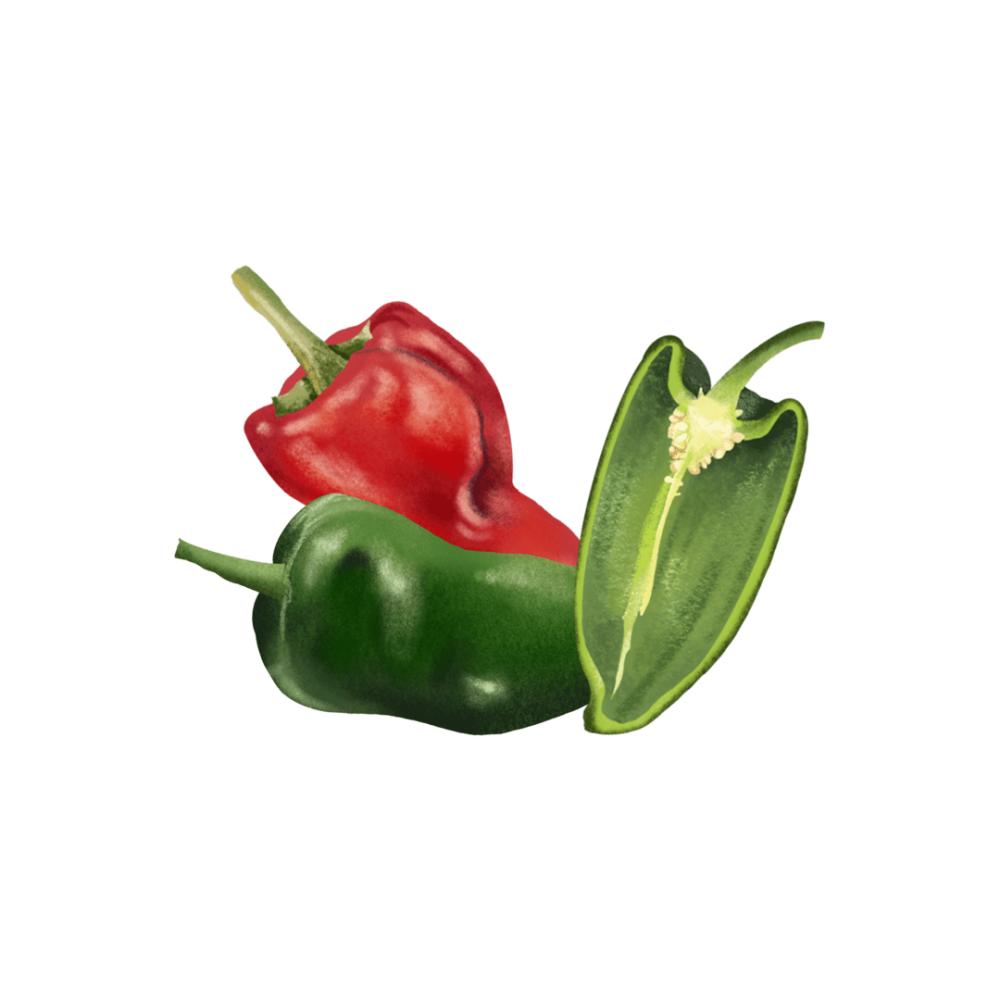
Latin Name: Capsicum annuum
Other Names: ancho chile (when dried)
Uses: vegetable
What Are Poblanos?
Poblanos are a type of green chile that’s slightly smaller than a bell pepper. They’re in the nightshade family (Solanaceae), along with tomatoes, potatoes, and all the other chile peppers. Although they’re the same species as a jalapeño and even a bird’s-eye chile, poblanos are quite mild, as long as they’re green. They get hotter as they ripen and turn red. Poblanos are called poblanos only when they’re fresh. When dried, they’re called anchos.
Why Are Poblanos Healthy?
- Poblanos are a good source of fiber, vitamins A and K, potassium, and antioxidants like beta-carotene and vitamin C.
- Antioxidants in poblanos help reduce inflammation and support overall health.
- Capsaicin, a bioactive compound in poblanos, has antioxidant properties and may help boost metabolism and cognition.
- Poblanos may also contribute to lower blood pressure and improved blood flow.
What Do Poblanos Taste Like?
A poblano tastes like a cross between a green bell pepper and a jalapeño, though it doesn’t have the heat of a jalapeño. Poblanos have a slightly sweet and grassy flavor that intensifies when they are roasted. The flesh of the pepper isn’t as thick or meaty in texture as a bell pepper’s.
How Do I Use Poblanos?
Poblanos are classic stuffing peppers, used in chiles rellenos and chiles en nogada. They’re often roasted first to soften them and make it easier to remove the skins before stuffing and cooking. You can also dice raw poblanos and add to stews and soups, casseroles and bean dishes, or cornbread batter.
What Do Poblanos Pair Well With?
Poblanos are delicious with fellow American crops (the adage “What grows together, goes together” holds true here), namely tomato, squash, potato, and especially corn, whether fresh or nixtamalized (soaked and cooked in usually limewater, then washed and hulled, rendering the corn more nutritious). Poblanos’ flavor is robust enough to cut through creamy and cheesy sauces, making a beautiful pairing. The citrusy-piney hints in Mexican oregano and cumin make these really good spices to use in poblano dishes.
Where Do Poblanos Grow?
Chiles were domesticated in Peru and Bolivia at least 6,000 years ago and eventually spread throughout South and Central America, as well as southern North America, which resulted in poblanos originating in Puebla, Mexico. Mexico still produces a substantial crop of poblanos, but worldwide, China leads chile production.
How Do I Buy Poblanos?
Buy poblanos fresh. They’re a pretty common chile in the United States, so you should be able to find them at mainstream grocery stores in the produce department with the habaneros and Fresno chiles. If you shop at larger supermarkets or stores that serve a Latino clientele, not only will the prices typically be much lower but the peppers will also probably be fresher. Select firm, shiny specimens with no black or mushy spots, and stash them in the crisper drawer of your refrigerator, where they’ll keep for about a week.
Surprising Poblano Facts
Like the chile, the name of the sauce mole poblano (usually made from dried anchos, not fresh poblanos) refers to the sauce being from Puebla. Chiles en nogada is a dish of poblanos stuffed with spicy picadillo, bathed in a creamy walnut sauce, and sprinkled with pomegranate arils. Though chiles en nogada is widely regarded as one of the national dishes of Mexico, all its ingredients, besides the chile, originated on the other side of the Atlantic Ocean.
See Also


More on Developing Healthy Habits