Lemon balm
Other names: Lemon mint
Latin name: Melissa officinalis
Uses: Herb
Benefits: Relaxation, sleep, digestion
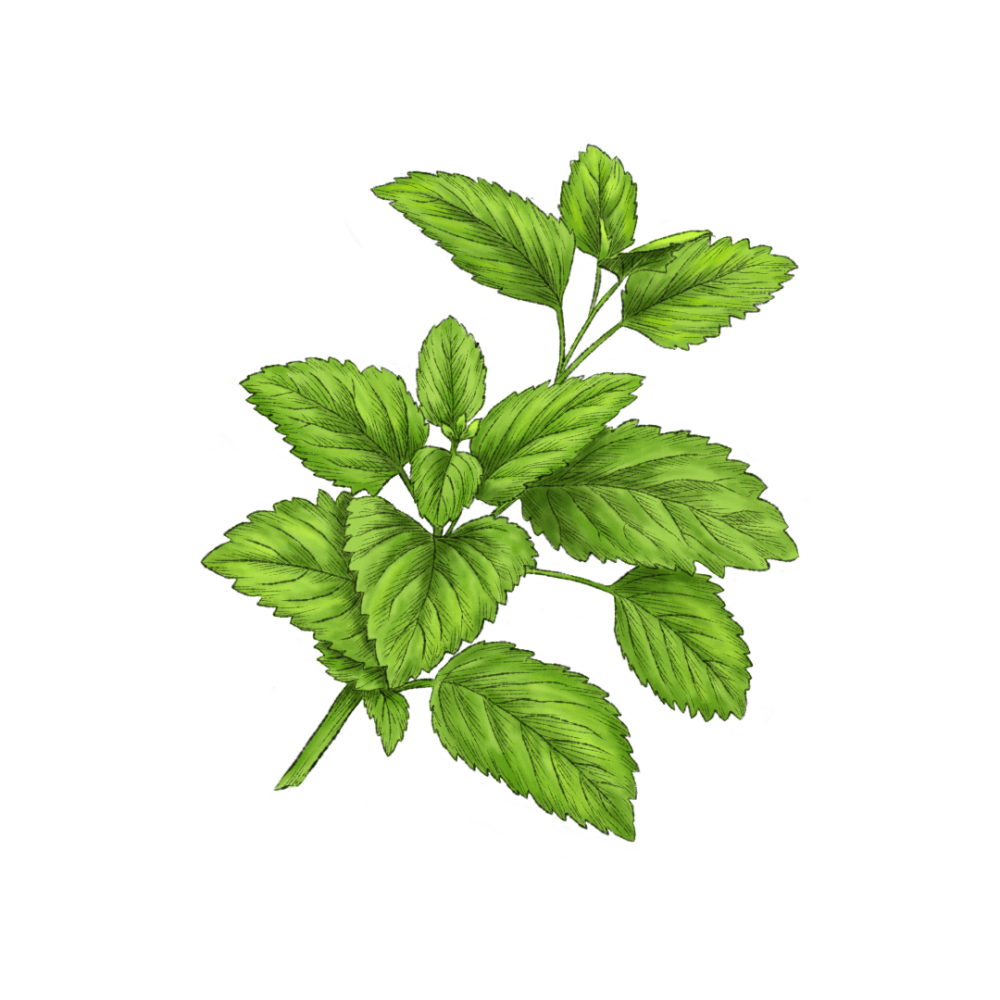
Brush lemon balm’s soft green leaves and they release a fresh, unmistakably lemony scent. Native to the Mediterranean, lemon balm has been valued since antiquity for its fragrance. In Tudor England, it was used as a strewing herb, scattered across floors, where its lemon scent was released underfoot and helped freshen a room. Like other mints, lemon balm grows enthusiastically and can spread quickly, taking over a garden.
Why It’s Good for You
Supports relaxation. European herbal remedies have long used lemon balm leaf to ease mild nervous tension. Science is beginning to see why: Rosmarinic acid, one of its key compounds, slows the breakdown of GABA, an amino acid that functions as your brain’s calming signal, so it has more time to work. Lemon balm’s bright aromatic oils, including citronellal and citral, add to the sensory experience of a warm infusion.
Aids restful sleep. By supporting some of the same GABA pathways involved in relaxation, lemon balm may make it easier to settle at the end of the day. In European herbal traditions, the leaves have a long history as an evening infusion for restlessness and sleep.
Supports digestion. Lemon balm’s fragrant volatile oils have traditionally been valued for settling the stomach. In European herbal practice, an infusion of the leaves is taken after meals to ease mild bloating, gas, and discomfort.
Flavor Profile
Lemon balm smells vividly of lemon but has none of the sourness. The taste is softer with hints of mint, grass, and gentle spice, plus a mild bitterness when chewed. Its citrusy aroma is brightest when the leaves are fresh and gently bruised.
How to Use It
Herbal infusions. Steep fresh or dried leaves in hot water for a gentle, aromatic citrusy infusion, or make a blend with any combination of chamomile, lavender, passionflower, and peppermint. Add a little honey if desired.
Green sauces. Chop the leaves into pesto or chimichurri. The grassy citrus notes pair well with olive oil, garlic, and nuts, especially pistachios.
Spring cooking. Pair lemon balm with mint and a little cream for a savory turn that suits peas, asparagus, new potatoes, and chives. It’s great with fish too.
Fresh finishing. Scatter torn leaves over fruit, salads, or yogurt for a lemony fragrance. Add them just before serving to preserve the delicate aroma.
3 Ways to Add It to Your Wellbeing Routine
For a sensory reset. Keep a small pot of lemon balm near your desk or kitchen. During a midafternoon slump, or after a hectic call, rub a leaf between your fingers, breathe in the citrusy aroma, and use the moment as a cue to step away for a few minutes.
For settling after a meal. Pair lemon balm with fennel or mint in a warm infusion after a heavy meal. Fennel adds a soft sweetness, mint a cooling edge. All three herbs are carminatives, which help relieve gas and bloating.
For winding down before bed. Steep 1 to 2 teaspoons of dried lemon balm, or a small handful of fresh leaves, for 5 minutes in water that has just boiled. Sip it about 30 minutes before bed to signal that the day is winding down.
Where to Find It and How to Store
Look for dried lemon balm at tea shops and herb stores or in packaged herbal tea blends. Keep it in an airtight container away from heat, light, and moisture to help preserve the aromatic oils.
Fresh lemon balm is less commonly sold alongside everyday supermarket herbs, so growing your own can be an easy way to keep it within reach. Look for young plants at herb nurseries. Pick fragrant bright-green leaves as needed. Gather the tender tips and upper leaves regularly to encourage fresh growth.
Did You Know?
The name Melissa comes from the Greek word for “honeybee.” Lemon balm’s small flowers are rich in nectar and especially attractive to bees, a connection reflected in the plant’s botanical name.
More on Boosting Happiness




More on Sleeping Well