We Don’t Need More Charity. We Need Resolution
We live in a world where philanthropy is everywhere: galas, pledges, partnerships. We count donations and print glossy reports. In the United States alone, we give over $400 billion every year.
And, still, the problems persist.
It is not that people are unkind or don’t care. Intent is not the problem. Progress is being made, but innovation, accountability, and ownership are missing.
Right now, giving is too often a transaction: a check here, a grant there. Enough to feel good, but rarely enough to finish the job. We have mistaken generosity for problem-solving, and that’s what has to change.
If I run a company and I have a problem, I own it. I build a plan, assign a team, and measure results. I do not stop until it is solved. Why do we not treat social problems the same way?
A suggestion: Pick one problem. Just one. And don’t just donate to it. Own it. Make it yours. That means leaning in, not just writing a check. Here’s what that can look like.
- Spend time with the problem. Go see it. Understand who it touches and why it persists.
- Listen before you act. The best solutions often come from those living the challenge.
- Build a plan, even if it’s imperfect. Start somewhere. Refine as you go.
- Bring others in. Find partners who share the urgency and can add skills or scale.
- Start before you have all the answers. You may not know where every dollar will come from yet. Move anyway.
That is how companies start. That is how real solutions begin. There is no single road map. What matters is intent, persistence, and the willingness to lead when certainty is scarce.
This is what we do at Roundglass. We do not build programs. We build systems.
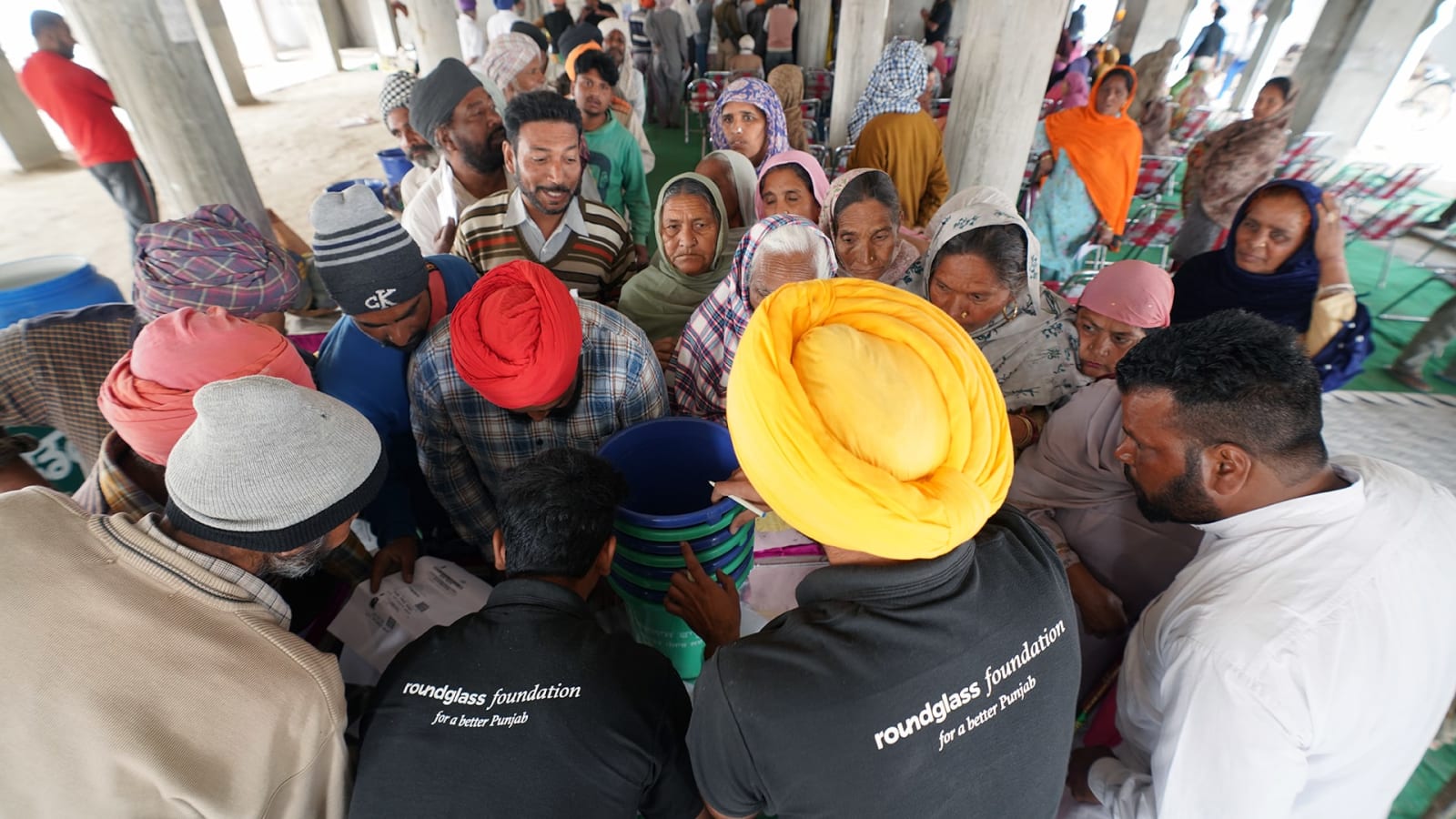
Take Punjab, India. There are 12,000 villages. Our vision is to activate 120,000 local changemakers, people trained in governance, sustainability, mental health, and innovation. These are not aid recipients. They are architects of a new social fabric. Already, thousands of villages are in motion. Women lead ecological restoration. Young people gain skills that make them future-ready. Fix the foundation and the need for endless charity disappears.
Or take education. Too many initiatives deliver content. Few reimagine learning for resilience and creativity. Our Roundglass Learn Labs prototype is about preparing learners for an uncertain world by equipping them with curiosity, emotional intelligence, and civic responsibility. This is how you break cycles of poverty: not by handing out scholarships, but by redesigning learning itself.
And then there is planetary health. India’s biodiversity is among the richest on Earth and among the most threatened. That is why we launched Roundglass Sustain. I do not have a perfect financial model for the intiative today. But I know this: We cannot let 1.4 billion people destroy the biodiversity of India that sustains us all. So, we collaborate. We form consortiums. We share data. Because saving ecosystems is not a local problem. It is a shared human obligation.
Our mantra is simple: At the end of 20 years, every initiative must be self-sustaining. It should not require us or anyone else to keep feeding it. The people it serves should stand on their own. That changes everything. When you put a 20-year lens on a problem, you think differently. You plan differently. And you measure differently.
When it comes to measurement, we insist on radical transparency. Anyone can go to our impact dashboard, and see real-time progress: stories, metrics, outcomes. Anyone can see the numbers in our annual report. We do not hide information, we share it. And if the data says we need to change, we change.
This is what giving should feel like. Not guilt-driven, but purpose-driven. Not reactive, but visionary. Less about charity and more about resolution.
Because if every company, every leader, every person picked a problem and owned it, the world would be unrecognizable in 15 years. Why? Because systems reinforce one another. End hunger and children learn better. Educate communities and opportunities expand. Protect ecosystems and economies stay resilient.
You do not need billions. You need intent. You need will. And you need to stay in the fight until the fight is won.
So here is a thought:
Maybe we do not need more charity.
Maybe we need resolution.
Lead From Wholeness.
This article is part of Sunny Singh's LinkedIn series on Wholistic Wellbeing.
About the Teacher
