The Burnout Paradox: You Can’t Scale What You Can’t Sustain

Built to Scale, Breaking Inside
In my early forties, I was running my own company, and running myself into the ground.
I worked 16-hour days. Slept four, maybe five hours a night for years. When you’re 32, you feel invincible. You think you’ll live forever. But burnout doesn’t happen all at once. It creeps in quietly. A tension in the shoulders. Headaches that won’t go away. A mind that’s always buzzing, never resting.
I didn’t recognize it at the time. I was so much in the game, and not realizing how intense the game is.
Addicted to the Work, Blind to the Cost
I’ve experienced burnout twice: first at Edifecs, and later at Roundglass. But they were very different.
In my first company, I pushed through burnout with no awareness. I suffered but didn’t stop. I believed every minute had to count, every moment had to move the needle. The work became everything. The cost? My energy, my presence, my peace.
With Roundglass, it was different. I recognized the signs. And more importantly, I course corrected.
And the more often I did it, the more natural it became.
Every time you course correct, it becomes a habit. You won’t eliminate frustration or fatigue. But you’ll catch it sooner. You’ll start to control the obsession. That’s when you start winning. That’s when you centre yourself. That’s when you begin living with joy.
Leading While Breaking
Back then, I thought the hustle was necessary. That rest was weakness. That slowing down meant falling behind.
But I’ve come to learn this:
- You can’t build something lasting by burning yourself out.
- You can’t lead from wholeness if you’re living in fragmentation.
What I’d been doing wasn’t working. I felt drained, despite high output. My energy crashes became frequent and I became easily irritable. Even after a full night’s sleep, I woke up tired. That’s when I made a shift — not to do wellness, but to live wellbeing.
Scaling From the Inside Out
My entrepreneurial journey began in 1995 with Edifecs, a healthcare tech company. Leading that company gave me a front-row seat to the realities of our healthcare system, and I saw that it wasn’t about health. It was about treating illness.
That realization led me to build Roundglass in 2014, a company dedicated to democratizing Wholistic Wellbeing. Our goal: help people live not just longer, but better.
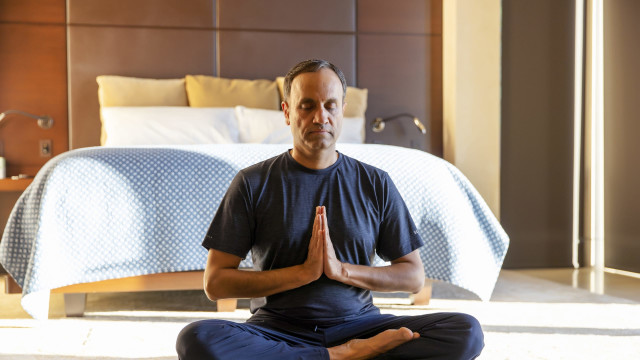
Wellbeing isn’t a collection of wellness hacks. It’s a lifestyle. My own includes daily yoga and meditation, mindful eating, gratitude, giving back, and time spent with people and cultures that broaden my view. These aren’t side activities, they’re what keep me grounded, focused, and whole.
Rest Is a Power Move, Not a Weakness
We’re living in a world that glorifies exhaustion. But rest is not a reward for performance, it’s fuel for it.
One study on tech workers in Japan found that each additional hour of weekday rest resulted in 15 more minutes of actual sleep. That may not sound like much, but it signals something deeper:
- Less stress = deeper sleep = faster recovery.
- And better recovery means better leadership.
It’s not just about logging more hours in bed. It’s about helping your body shift out of survival mode and into healing.
When I prioritize rest, I make better decisions. I lead with more clarity. I show up more fully — for my team, for my family, and for myself.
Performance Without Self-Punishment
Being an entrepreneur is like driving a high-performance car, it’s fast, demanding, and thrilling. But you can’t redline the engine forever.
In my earlier years, I chased excellence at the expense of everything else. Now, I know better.
Burnout isn’t a badge of honour. It’s a warning light on the dashboard of your life.
The key isn’t to slow down completely. It’s to build a rhythm that includes recovery.
I move. I meditate. I maximize sleep. I rest my mind as intentionally as I train it.
Not because I’m fragile, but because I’m focused.
Wholeness Is a Leadership Strategy
At Roundglass, we’re building a workplace culture where wellbeing isn’t an afterthought, it’s a foundation.
We’re conducting research on how to make wellbeing strategies work across remote, hybrid, and in-person environments, because burnout doesn’t care where your desk is.
Encouraging time off, supporting mental health, creating space to breathe...these aren’t perks.
They’re strategies for better performance, higher retention, and healthier teams.
You can’t scale what you can’t sustain.
You Don’t Have to Burn Out to Lead Well
If you’re a founder, a builder, a leader, take this as your invitation to pause.
- Not to quit.
- Not to collapse.
- But to course correct.
- Find the rhythm that works for you.
- Rest before you’re forced to.
- And remember: wholeness isn’t weakness.
- It’s wisdom.
This article is part of Sunny Singh's LinkedIn series on Wholistic Wellbeing.
About the Teacher