Clarity, Not Calm, Is the True Foundation of Wellbeing in High-Stakes Environments
The boardroom conversations that matter most today aren't happening around quarterly projections. They're happening around questions like "How do we measure trust?" "What's our team's energy ROI?" "Are we tracking wholeness alongside productivity?"
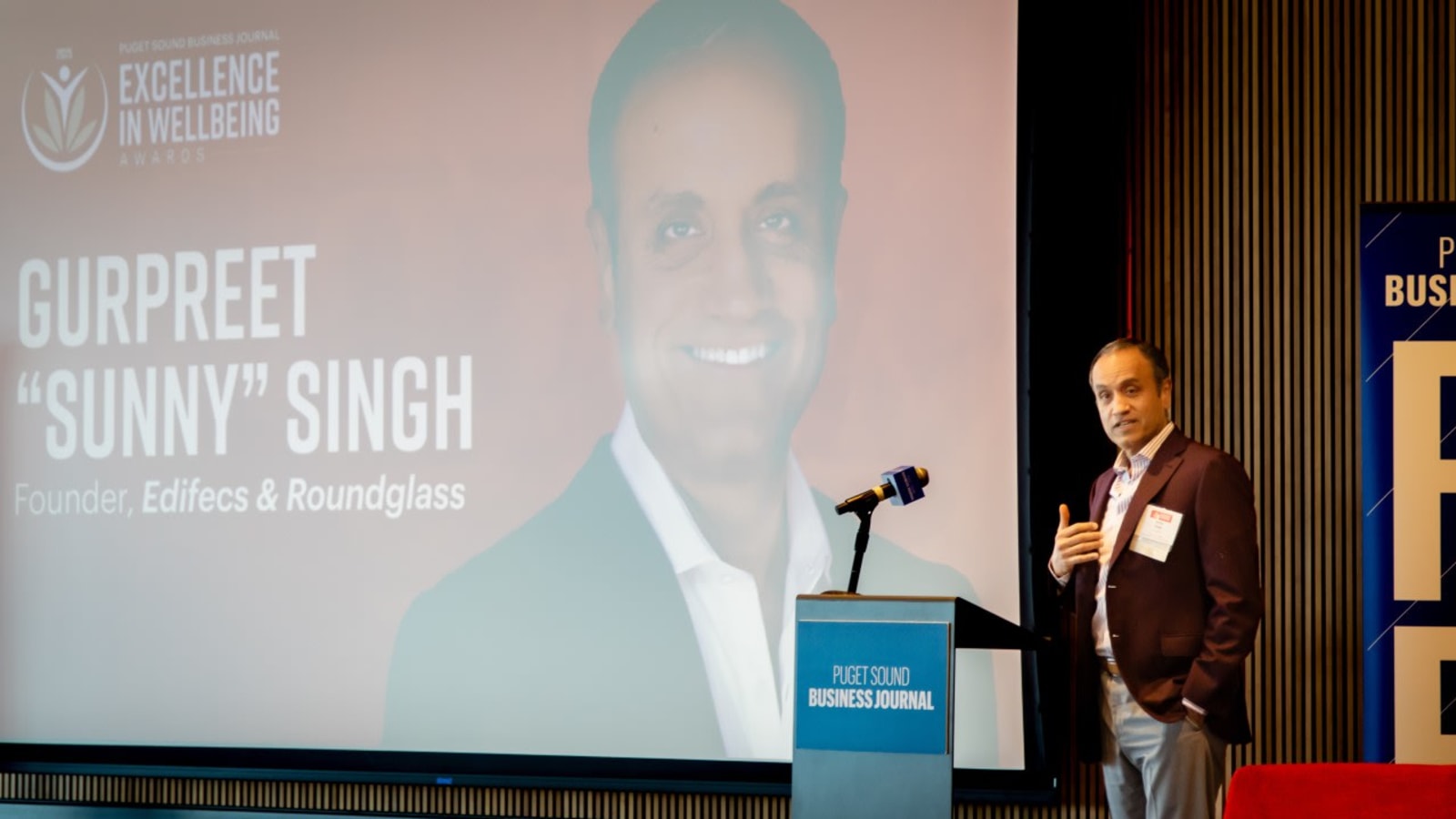
At a recent event for the Puget Sound Business Journal Excellence in Wellbeing Awards, I witnessed something that would have seemed completely foreign only five years ago. CEOs weren't just talking about creating better workplace cultures. They were asking how to measure improvement.
The focus had shifted to building environments where organizational strength can be measurably improved by a small change like a transparent 1:1 check-in or one mindful pause to open a meeting.
This shift isn't just anecdotal. It's a fundamental recalibration of what leadership success looks like today. But here's what I've learned: You can't manage what you don't measure. And most organizations are still measuring the wrong things. We've been choosing the calm of familiar metrics over the clarity of what actually drives performance.
When I founded Edifecs in 1996, success meant failing quickly and trying again. The signs of burnout were worn like badges of honor. I learned the hard way that this approach doesn't just exhaust people; it depletes the very creativity and trust that fuel sustainable growth. What I didn't realize then was that I was optimizing for short-term output while unknowingly destroying long-term capacity. I was seeking the calm of quick wins rather than the clarity of sustainable systems.
The questions that emerged from that experience were simple: What if we measured leadership success differently? What if we chose clarity over the comfortable calm of avoiding these harder questions? At Roundglass, we've developed three frameworks that are changing how we measure success.
Trust Capital: We treat trust as a measurable business asset that compounds like financial capital. Teams with high trust capital recover from setbacks 40% faster and collaborate 60% more effectively.
Energy Return on Investment (EROI): We measure not only what employees produce but also how much energy and wellbeing they gain or lose in the process. Sustainable performance requires positive EROI.
The Wholeness Quotient: An organizational health dashboard connected to a comprehensive wellbeing platform that tracks mental, social, and spiritual energy alongside profit margins. When wholeness metrics rise, innovation follows.
These frameworks don't promise calm. They promise clarity. And clarity, while sometimes uncomfortable, is what transforms organizations.
Companies prioritizing employee wellbeing report 23% higher profitability, 18% higher productivity, and 12% better customer metrics. What these numbers reveal is something deeper: When you build trust and measure energy thoughtfully, performance becomes sustainable rather than extractive. That's why we measure trust velocity (how quickly people recover connection after conflict) as often the first indicator of whether Trust Capital is growing or depleting.
These frameworks revealed something essential: Wholistic wellbeing isn't a benefit; it's the operating system. When teams feel supported across physical, mental, emotional, and spiritual dimensions, they bring their complete selves to new challenges. They innovate from authenticity rather than from anxiety. The team’s Energy ROI stays positive even under pressure.
This requires leaders to embrace integration over separation. No more compartmentalizing "work life" and "real life." No more pretending that stress, relationships, and purpose don't directly impact performance.
The leaders I've been connecting with recently understand this. They're not just investing in meditation spaces alongside conference rooms. They're tracking their Wholeness Quotient as rigorously as revenue growth. They're building Trust Capital through transparency, not just authority.
The transformation begins with a simple recognition: Your people aren't machines optimized for output. They're whole human beings navigating complex lives, seeking meaning alongside their paychecks.
The old paradigm sought calm: "How can we squeeze more productivity without rocking the boat?"
The new paradigm seeks clarity: "How can we create conditions where people naturally thrive, even if it means facing uncomfortable truths?"
This isn't just a workplace trend; it's the future of competitive advantage. The next decade will be defined by organizations that master Trust Capital, optimize for Energy ROI, and lead with their Wholeness Quotient. At Roundglass, we're pioneering the tools and practices that make these metrics as standard as quarterly reviews.
Because the leaders building tomorrow's most successful organizations aren't just chasing metrics. Because true wellbeing isn't built on the calm of unawareness. It's built on the clarity of understanding what really matters. The question isn't whether this shift will happen; it's whether you'll lead it or follow it.
Lead From Wholeness.
This article is part of Sunny Singh's LinkedIn series on Wholistic Wellbeing.
About the Teacher
