Building the Future Generation: Why India’s Story Begins on Global Campuses
What a Truck in Rajasthan Taught Me About India’s Future
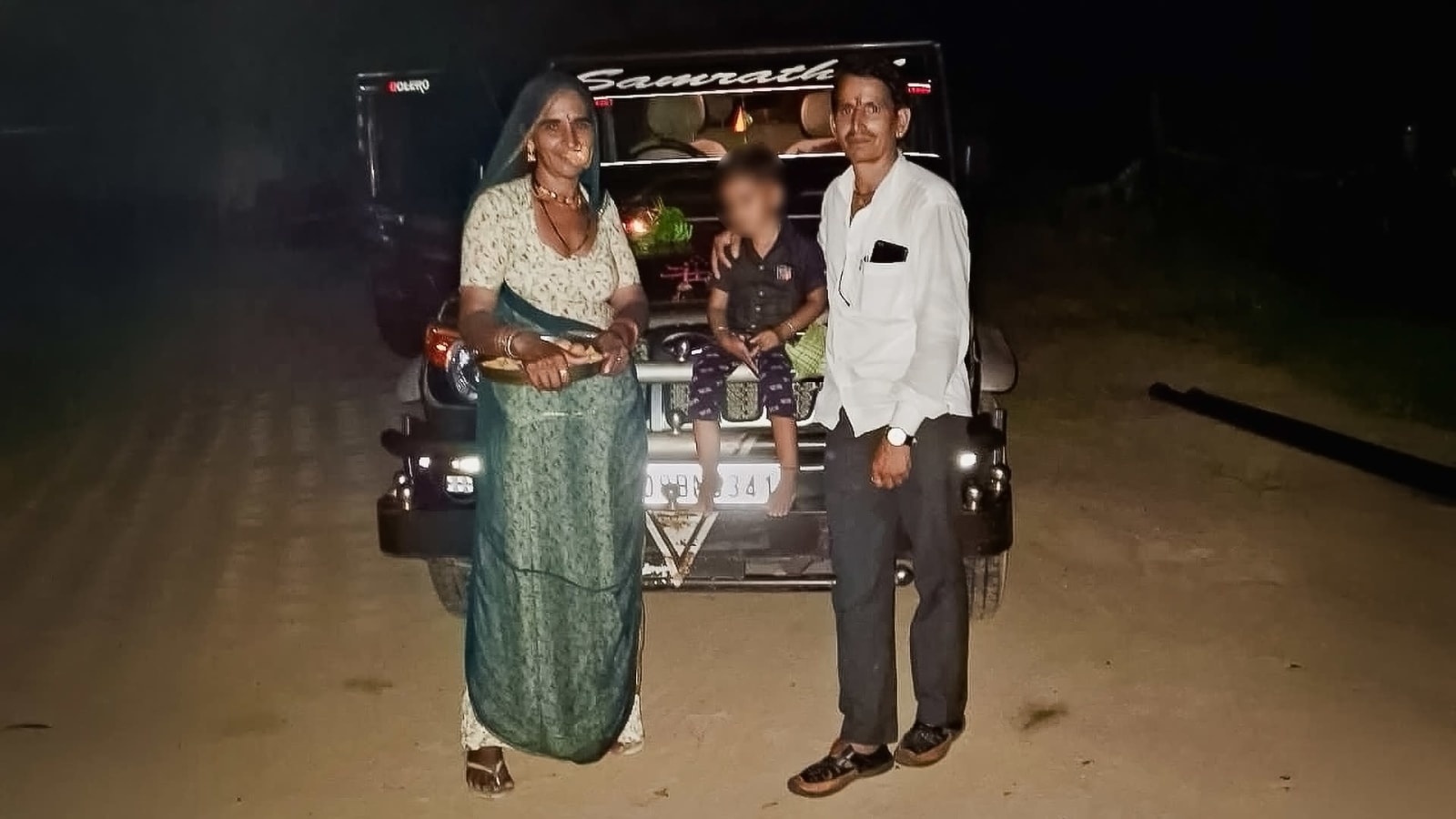
A few months ago, I saw a photograph that hasn’t left me since. A young man, Ashok Kumar from Rajasthan, shared a photo of his parents standing in front of an old truck. Years ago, that truck was sold by his parents so he could pursue his education in the United States. He had just completed his law degree, joined our legal team at Roundglass, and bought the truck back for them.
He wrote: “This is what one opportunity can do: It comes full circle and brings profound, heartfelt change.”
That image said more to me about India’s future than any white paper or policy proposal ever could.
That moment said more to me than any résumé or recommendation ever could. It reminded me of something I’ve always believed: That brilliance is everywhere, but opportunity is not.
We talk a lot about India’s future. But I don’t believe it will be written only in Delhi or Bengaluru. I believe it will rise from the villages, the small towns, the places where potential still waits for permission. That’s where the next generation of changemakers is growing up sharp, driven, and often invisible. If we can give those young people the right path, the right exposure, and the right support, they won’t just succeed. They will lead.
And when they land in classrooms in Seattle, Boston, or London, they arrive with something deeper than ambition. They carry a lived understanding of resilience, responsibility, and relationship. They’re not just studying systems. They’re learning to shape them. They’re not just earning degrees. They’re becoming bridges between geographies, generations, and ways of being.
That belief helped inspire the creation of the Roundglass India Center at Seattle University. I didn’t build it to project India onto the world stage. I helped create space for a different kind of dialogue, one where India is not studied as a geopolitical abstraction but engaged with as a living, evolving truth.
Under the leadership of Professor Sital Kalantry and associate director Shannon Young, the center has done something remarkable. In just two years, it’s hosted members of Indian Parliament and the Supreme Court, welcomed Nobel laureates, supported groundbreaking research, launched a podcast, and reached audiences across five continents.
But to me, it’s not the list of accomplishments that matters. It’s the intention. The orientation.
The center doesn’t teach India as a fixed narrative. It offers India as a question. A tension. A possibility. And that kind of education matters now more than ever. The world isn’t short on talent. It’s short on wisdom. It’s short on people who can hold complexity without losing their clarity. Who can lead across cultures without losing their center. Who can navigate systems, not just succeed within them.
And that’s what I see when I look at students like Ashok. They’re not just future policymakers. They’re diplomats of perspective. Carriers of a quiet power that doesn’t need to announce itself to make an impact.
India has always had something to offer the world, but its greatest contributions don’t arrive as exports. They arrive as presence. As the ability to listen before we speak. To serve without spectacle. To embody a way of being that sees interdependence not as ideology but as reality.
That’s why I continue to invest in platforms like the Roundglass India Center. Because it’s not about legacy. It’s about alignment. It’s about meeting the future where it’s already emerging—in the hearts and minds of young Indians who carry their culture like a compass, not a credential.
So, yes, that old truck in Rajasthan means something. It means the future is already turning back toward itself. Quietly. Powerfully. One student, one classroom, one act of return at a time.
Lead From Wholeness.
This article is part of Sunny Singh's LinkedIn series on Wholistic Wellbeing.
About the Teacher
